PHYSICO–CHEMICAL PROPERTIES OF SOIL
🌱 PHYSICO–CHEMICAL PROPERTIES OF SOIL.
(Mineral Particles, Soil pH, Soil Aeration, Organic Matter, Humus, Soil Microorganisms)
🌍 Introduction
The physico-chemical properties of soil play a crucial role in determining its fertility and suitability for plant growth. These properties include both physical aspects, such as soil texture and aeration, and chemical aspects, such as pH and nutrient availability. Together, they regulate essential processes like water movement, nutrient cycling, and microbial activity in the soil. A clear understanding of these properties is fundamental for agriculture, ecology, and environmental management.
Mineral Particles of Soil
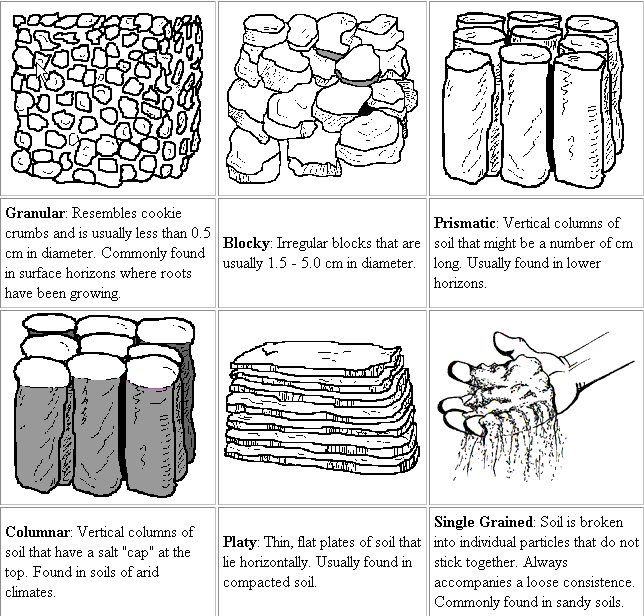
Mineral particles form the inorganic component of soil and are derived from the weathering of rocks. These particles vary in size and are broadly classified into sand, silt, and clay.
Sand particles are the largest and provide a coarse texture to the soil. They allow rapid drainage of water and good aeration but have low nutrient-holding capacity. Silt particles are intermediate in size and contribute to the smooth texture of soil. They retain more moisture than sand and are relatively fertile.
Clay particles are the smallest and possess a large surface area, enabling them to retain water and nutrients effectively. However, excessive clay content can reduce aeration and hinder root growth.
Thus, the proportion of these mineral particles determines the soil texture, which in turn influences water retention, aeration, and nutrient availability.
⚗️ Soil pH

Soil pH is a measure of the acidity or alkalinity of the soil solution, expressed on a scale of 0 to 14. A pH value below 7 indicates acidic soil, while a value above 7 indicates alkaline soil.
Soil pH is a critical factor influencing nutrient availability and microbial activity. In highly acidic soils, essential nutrients such as calcium, magnesium, and phosphorus become less available, whereas toxic elements like aluminum may become more soluble. In alkaline soils, micronutrients like iron, zinc, and manganese may become deficient.
Most plants grow best in a slightly acidic to neutral pH range (6.0–7.5). Therefore, maintaining an optimal pH is essential for proper plant growth and soil fertility.
🌬️ Soil Aeration


Soil aeration refers to the exchange of gases between soil and atmosphere, particularly oxygen and carbon dioxide. It depends on the presence of pore spaces within the soil.
Well-aerated soils contain sufficient oxygen, which is essential for root respiration and microbial activity. In poorly aerated soils, oxygen deficiency leads to the accumulation of carbon dioxide and other toxic gases, adversely affecting plant growth.
Soil aeration is influenced by factors such as soil texture, structure, moisture content, and compaction. For instance, sandy soils are well aerated due to large pore spaces, whereas clay soils often suffer from poor aeration.
Proper aeration ensures healthy root development and efficient nutrient uptake.
🌿 Organic Matter in Soil

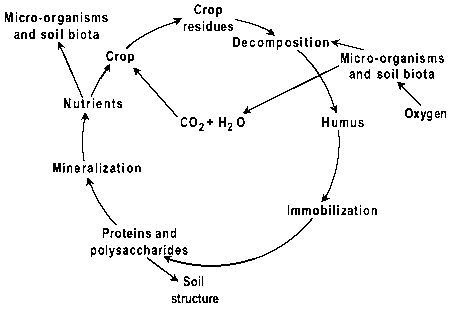
Organic matter consists of dead and decomposed plant and animal residues present in the soil. It is an essential component that improves soil fertility and structure.
Organic matter enhances the water-holding capacity of soil and improves its texture by binding soil particles into aggregates. It also serves as a source of essential nutrients such as nitrogen, phosphorus, and sulfur.
Furthermore, organic matter supports the growth of soil microorganisms, which play a vital role in nutrient cycling and decomposition processes.
🌱 Soil Humus


Humus is the stable, dark-colored organic substance formed by the decomposition of organic matter. It is highly resistant to further decomposition and remains in the soil for a long time.
Humus improves soil fertility by enhancing nutrient retention and cation exchange capacity. It also increases the water-holding capacity and provides a favorable environment for microbial activity.
The presence of humus gives the soil a dark color and contributes significantly to its productivity.
🦠 Soil Microorganisms


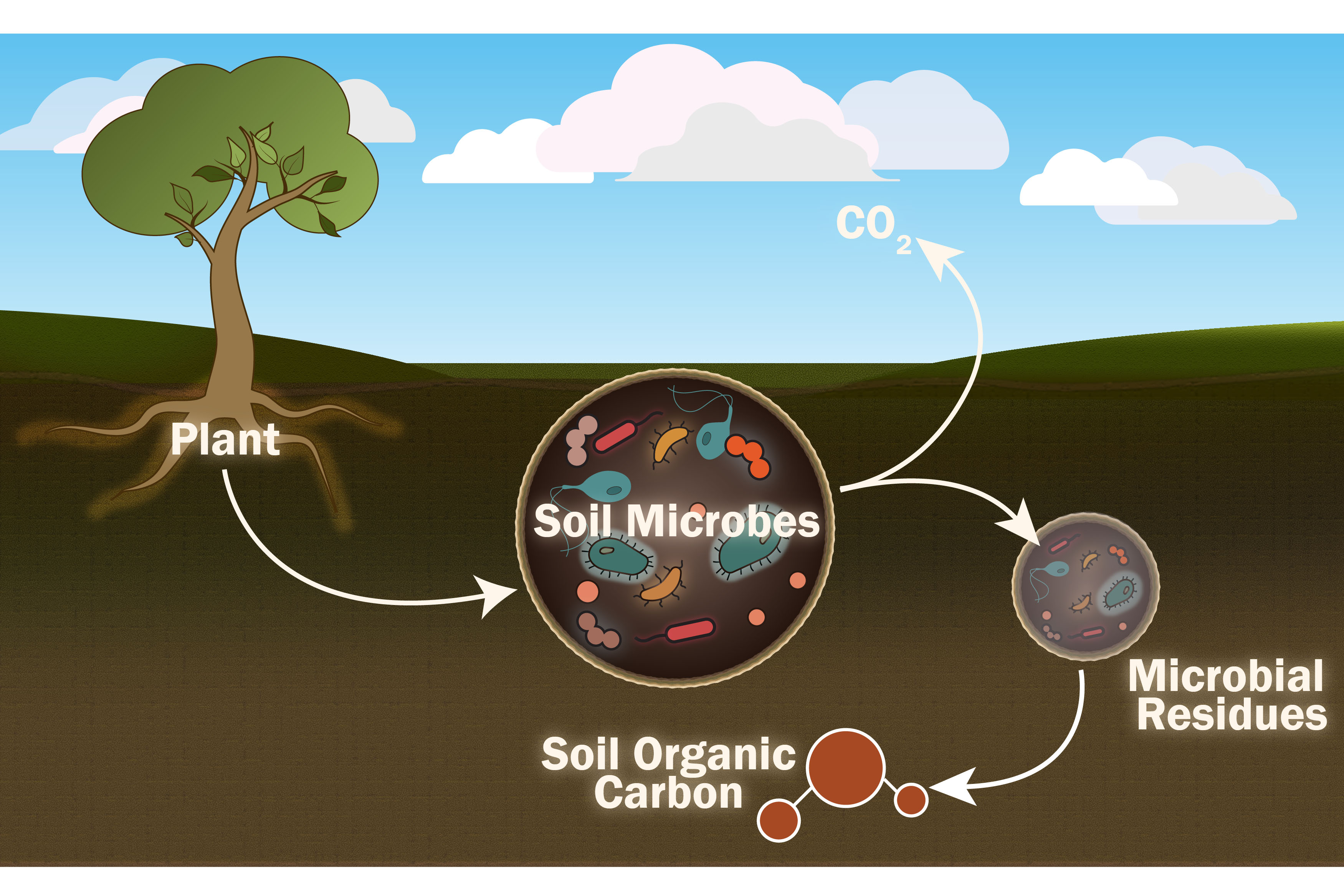
Soil microorganisms include bacteria, fungi, actinomycetes, algae, and protozoa. These organisms play a vital role in maintaining soil health and fertility.
They are responsible for the decomposition of organic matter, leading to the release of nutrients in forms that plants can absorb. Certain bacteria, such as Rhizobium, are involved in nitrogen fixation, converting atmospheric nitrogen into usable forms.
Fungi form symbiotic associations like mycorrhizae, which enhance nutrient and water absorption by plant roots. Actinomycetes contribute to the breakdown of complex organic compounds.
Thus, soil microorganisms are essential for nutrient cycling, soil structure maintenance, and overall ecosystem functioning.
🎯 Conclusion
In conclusion, the physico-chemical properties of soil, including mineral particles, pH, aeration, organic matter, humus, and microorganisms, collectively determine soil fertility and plant productivity. A proper balance of these factors ensures optimal plant growth and sustainable agricultural practices.


Comments
Post a Comment